
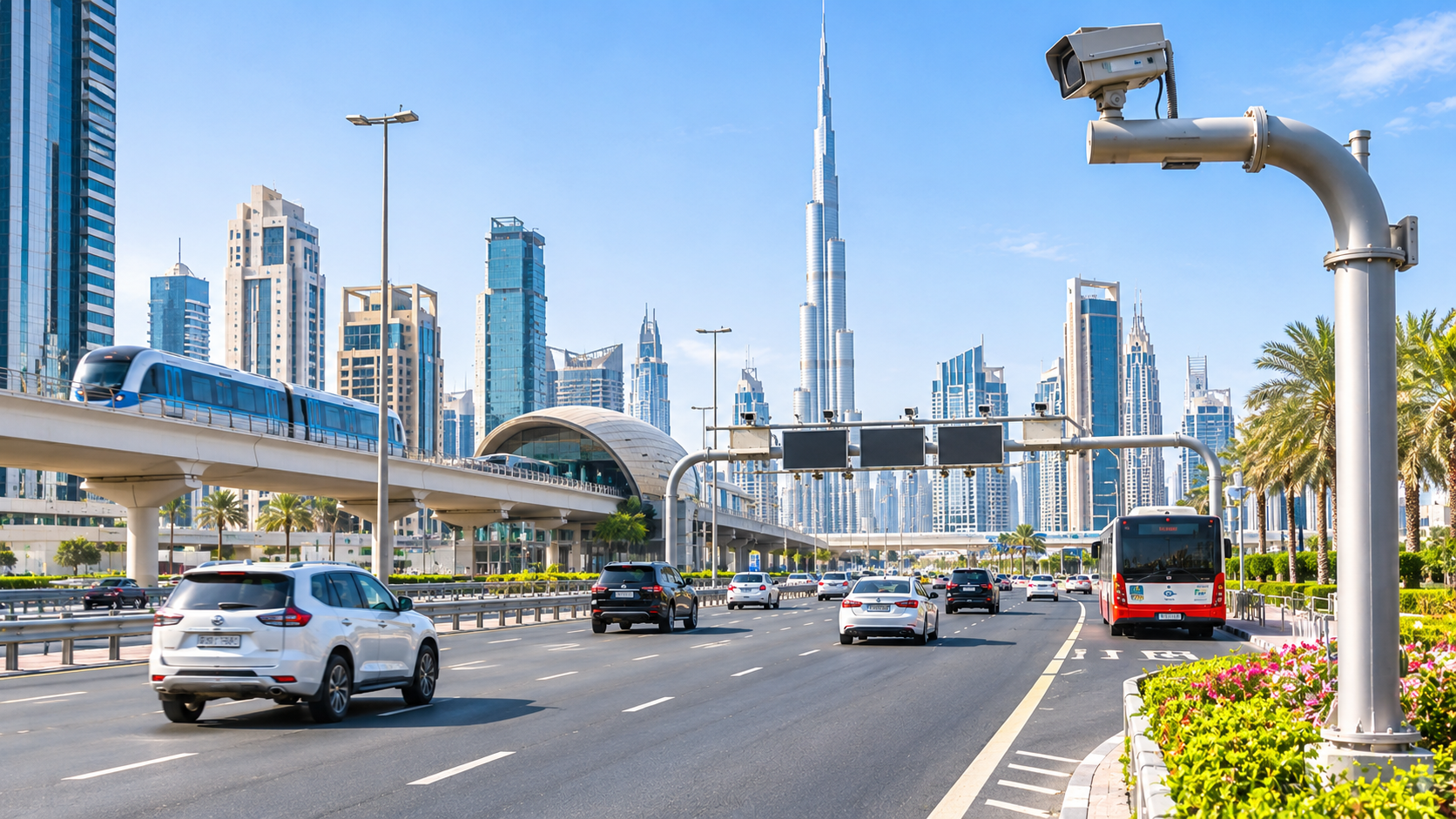
Dubai Plans to Cut Traffic Congestion by Up to 5% With New AI Strategy: What Motorists Should Know
Dubai motorists could spend less time stuck in traffic as the Roads and Transport Authority (RTA) expands its use of artificial intelligence across the emirate’s transport network.
The authority has introduced an updated AI strategy that aims to reduce traffic congestion by 3 to 5 per cent, improve bus punctuality and make several RTA services faster for residents.
One of the most noticeable changes for vehicle owners could be the ability to complete certain licensing transactions in less than five minutes. The upgraded digital services will be accessible through the RTA app, website and WhatsApp.
The strategy was launched by Mattar Al Tayer, Director General and Chairman of the Board of Executive Directors of RTA, on November 1.
It is part of a wider digital transformation programme designed to make Dubai’s transport system more efficient as the city’s population and road network continue to grow.
Dubai targets up to 5% reduction in traffic congestion
For people who drive regularly in Dubai, reducing congestion is one of the most important goals of the new strategy.
RTA is targeting a 3 to 5 per cent reduction in traffic congestion through greater use of AI in traffic management, transport planning and road network operations.
The technology will analyse traffic data and help identify patterns that can support better planning and operational decisions.
Rather than relying only on existing traffic conditions, predictive systems can help the authority assess how the road network may respond to changing travel demand.
The objective is to make traffic management more responsive and improve the movement of vehicles across Dubai.
Vehicle licensing services could take less than five minutes
Another major part of the initiative concerns vehicle owners who regularly use RTA services.
The authority is upgrading Mahboub, its smart chatbot, so it can do more than answer questions. The platform is being developed to complete transactions and help customers access services digitally.
The upgraded Mahboub service is available through:
- RTA mobile application
- RTA official website
Customers can already complete five vehicle licensing services entirely online and access around 100 information services.
With integration involving UAE PASS and Dubai Pay, certain vehicle-related transactions can be completed in less than five minutes.
RTA aims to double the speed of service delivery through the platform. It also wants to increase the share of services delivered through Mahboub to 10 per cent by the end of 2026 and 50 per cent by the end of 2027.
AI could help make Dubai roads safer
The strategy is not limited to reducing journey times. Road safety is another important area.
RTA aims to reduce accidents involving newly licensed drivers by 10 to 20 per cent through the use of AI and data-driven systems.
One of the initiatives involves an AI-powered auditing system for vehicle licensing documents.
The Agentic AI Auditor uses machine learning and optical character recognition to examine documents, identify unusual information and recommend corrective action.
The system is designed to speed up auditing processes by up to 21 times. It also aims to expand checks from sample-based reviews to all documents within its scope.
According to RTA, the initiative could save more than 25,000 hours of manual work every year and covers seven priority services.
Bus passengers could see more reliable services
Dubai’s public transport network is also part of the AI rollout.
RTA has introduced an AI-powered bus network planner that uses around 20 AI agents to assess the performance of the bus system.
The technology can analyse service indicators, identify gaps in routes and simulate different operating arrangements before recommending changes.
The authority is targeting an improvement of up to 10 per cent in bus on-time performance.
It also wants to reduce the time required to implement bus service changes from approximately 60 days to 48 days.
For passengers, the intended benefit is a more reliable bus network, with services better aligned with demand and travel patterns.
Faster complaint handling and shorter waiting times
The new strategy also covers customer service, including complaints, applications and procedures that require approval from RTA.
The authority aims to reduce the time needed to process cases and complaints by 20 to 30 per cent.
It has also set targets to:
- Reduce waiting times at RTA Customer Happiness Centres by 14 to 16 per cent.
- Cut service delivery times by 15 to 20 per cent.
- Speed up electronic No Objection Certificate (eNOC) reviews.
The eNOC system uses AI to help applicants submit documents and carry out preliminary checks against approved procedures. It can also provide engineering insights to support approval decisions.
RTA handles approximately 130,000 such certificates annually, with demand increasing by around 11 per cent. The new system aims to make reviews three times faster and save more than 700,000 days annually.
RTA plans to expand AI across 41 areas
The updated strategy covers 41 areas across RTA’s agencies, sectors and departments.
Its first two implementation waves focus on 11 business areas. The initial programme includes 40 AI products, of which 11 have already been completed, along with four foundational projects.
RTA expects the wider programme to run over two and a half years.
The authority aims to generate more than AED 300 million in annual added value and move 50 per cent of its operations and services into an Agentic AI ecosystem.
Agentic AI refers to systems that can analyse information, plan tasks and carry out certain processes with less need for manual intervention.
What does this mean for Dubai residents?
For motorists, the biggest potential benefit is more efficient traffic management and quicker access to vehicle-related services.
People who use RTA’s digital platforms may also find that more procedures can be completed online, without visiting a service centre.
Bus passengers could benefit from improved punctuality and better route planning, while customers dealing with complaints and approvals may see shorter processing times.
However, these figures are targets under RTA’s updated strategy, not a guarantee that congestion or waiting times will immediately fall by the stated percentages.
The programme will be implemented over the coming years, with the authority gradually expanding AI-powered services across its transport and customer-service operations.